Advancements in Duckweed (Lemna Minor) Research: Exploring Sustainable Applications Bioproducts and Cultivation Strategies as Potential Drivers to Circular Economy
Circular Economy and Sustainability
23 February 2026
https://link.springer.com/article/10.1007/s43615-026-00756-y
Authors:
Johana Marcela Concha Obando, Beatriz Heitzman, Moranne Toniato, Thalisia Cunha dos Santos, Levi Pompermayer Machado & Guilherme Wolff Bueno
Resumo:
.
.
.
Abstract:
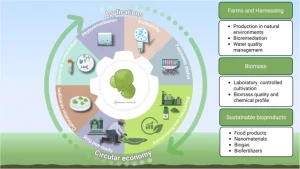
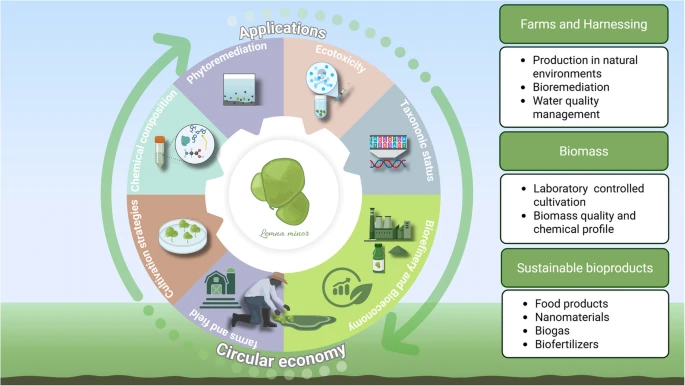
Lemna minor (duckweed) belongs to the family Lemnaceae and is a small, simple, perennial plant commonly found floating or submerged in freshwater environments. The growing interest in using L. minor as a biological model for various applications has led to a substantial body of literature covering its potential uses, bioproducts, chemical composition, and cultivation conditions in laboratory settings and open culture systems. However, the lack of comprehensive systematic reviews hampers the creation of a consistent database to assess research progress across different fields and its connection to global challenges related to the circular economy. Fifty articles obtained from a systematic search were categorized into predefined groups according to their application: ecotoxicology, phytoremediation, chemical composition/bioproducts, in addition to a section where studies on cultivation strategies were discussed. Some studies that update information on the taxonomic status and morphological characteristics of the species were also explored. This review aims to update, systematically organize and critically evaluate existing knowledge, as well as identify research gaps and highlight promising avenues for future investigations. Beyond summarizing advances, this work positions L. minor as a model species analyzed through the lens of major circular economy frameworks, highlighting how its biological versatility and bioproduct potential contribute to circular bioeconomy transitions, through its sustainable applications, innovative bioproducts and cultivation strategies.