Integrated strategies for managing stink bugs in soybeans: From conventional control to technological innovation
Crop Protection (Elsevier)
Volume 208, 2026
https://doi.org/10.1016/j.cropro.2026.107685
Authors:
Gabriela Patricia Unigarro Villarreal, Miguel Borges, Raùl Alberto Laumann, Maria Carolina Blassioli-Moraes, Luana de Lima Lopes, Adriano Arrué Melo, Leonardo Fernandes Fraceto
Abstract:
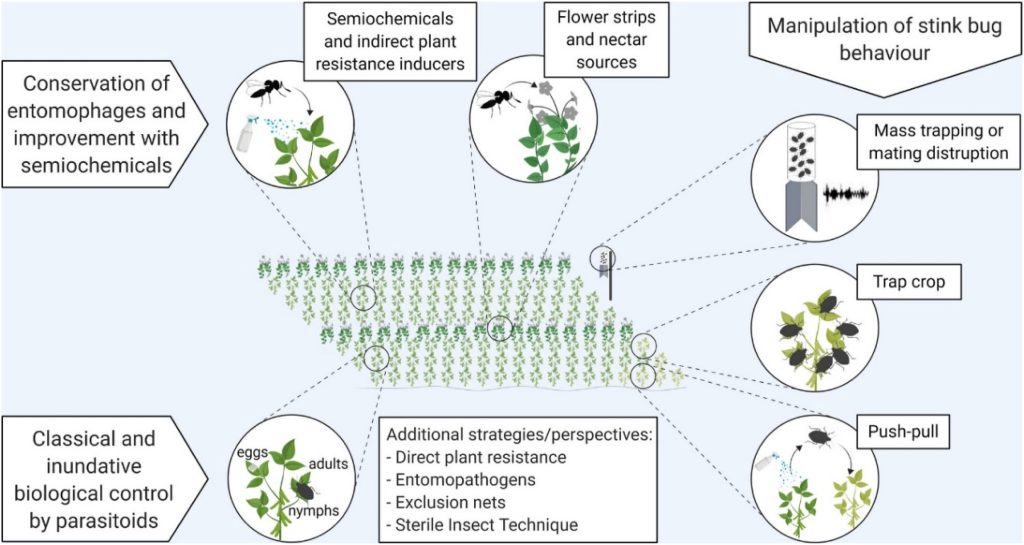
Stink bugs represent one of the major threats to soybean production due to the severe yield and grain quality losses they cause. This review provides a critical synthesis of conventional and emerging management strategies, including chemical, biological, and integrated pest management (IPM) approaches, as well as advances involving pheromones, semiochemicals, and nanotechnology. The analysis highlights not only the strengths of each method but also their limitations: chemical control ensures rapid suppression, yet accelerates resistance and environmental concerns; biological and pheromone-based methods offer selective and sustainable alternatives but require broader field validation; and nanostructured formulations show promise for controlled release and improved performance, though regulatory and toxicity challenges remain unresolved. Integrating these approaches within IPM frameworks can enhance specificity, reduce chemical dependence, and promote ecological balance. This synthesis underscores the need for interdisciplinary research and farmer–scientist collaboration to implement sustainable and resilient pest management strategies in soybean agroecosystems.